
Ceramic Coating for Exhaust Headers & Turbo Parts
High-temperature ceramic coating, often called exhaust coating, header coating or high-heat coating.
High-temperature ceramic coatings bond to the surface of the metal to protect parts that run extremely hot. Depending on the product, they can withstand constant temperatures of over 1,000°C.
Applied correctly, a high-temperature ceramic coating gives a hard finish that resists chipping, rust and corrosion.
Ceramic coatings come in a wide range of colours, from flat black to bright red, in finishes from matt and satin through to high gloss and metallic.

What Are the Benefits of Ceramic Coating?
Here’s how ceramic coating helps your parts perform better and last longer, while keeping a showroom finish:
- Improves the thermal efficiency of the engine.
- Reduces radiated heat from exhaust components, especially tubular performance headers and exhaust manifolds.
- Keeps temperatures more even throughout the exhaust system.
- Keeping heat in the exhaust helps maintain exhaust gas velocity, improving cylinder scavenging, horsepower and torque.
- Keeps the engine bay cooler.
- Extends the life of headers and neighbouring components.
- Improves protection against oxidation at high temperatures.
- Protects against rust and corrosion.
- Easy to clean and maintain.
- Available in a wide range of colours and finishes, including flat and satin, to suit any project.
- Mil-spec rated materials and QPL-approved colours.
What Are High-Temperature Ceramic Coatings Used For?

High-temperature ceramic coatings are typically used on high-performance aftermarket parts, or to refurbish original components. They can be applied to aluminium, stainless steel, carbon steel, chrome and cast iron.
They work particularly well on pistons, turbo housings and intakes, brackets, and exhaust manifolds, headers and pipes.
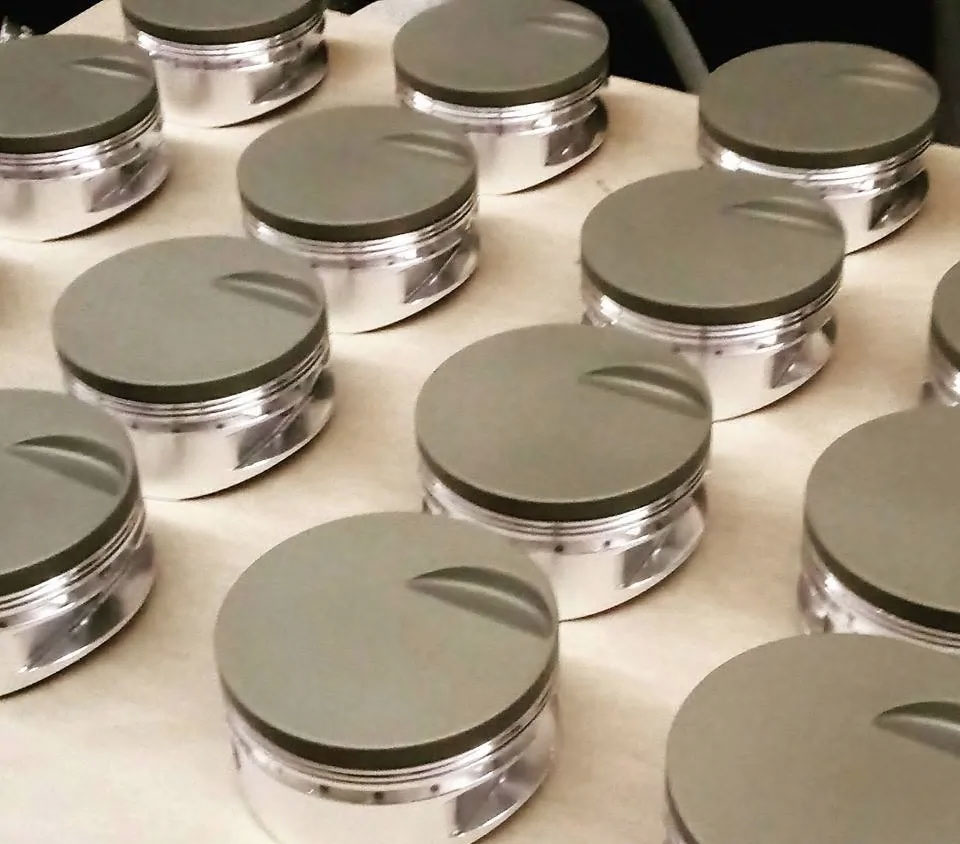
Cerakote V Series Piston Coat is a dark bronze/gold with a soft metallic look. It’s an oven-cured ceramic thin-film thermal barrier coating, designed for piston crowns, valve tops and the combustion chambers of cylinder heads.
It’s suitable for all ferrous and non-ferrous metals. V Series coatings are one-part, ready-to-spray coatings that handle temperatures up to around 980°C, combining high-temperature performance with excellent chemical resistance, durability and appearance. Their inorganic ceramic chemistry gives them both heat resistance and excellent physical stability.
Find out more about our piston coating service.
Why Use High-Temperature Ceramic Coatings?
Many car enthusiasts spend thousands upgrading their fuel and exhaust systems for better performance. A high-temperature ceramic coating is one of the best ways to protect that investment.
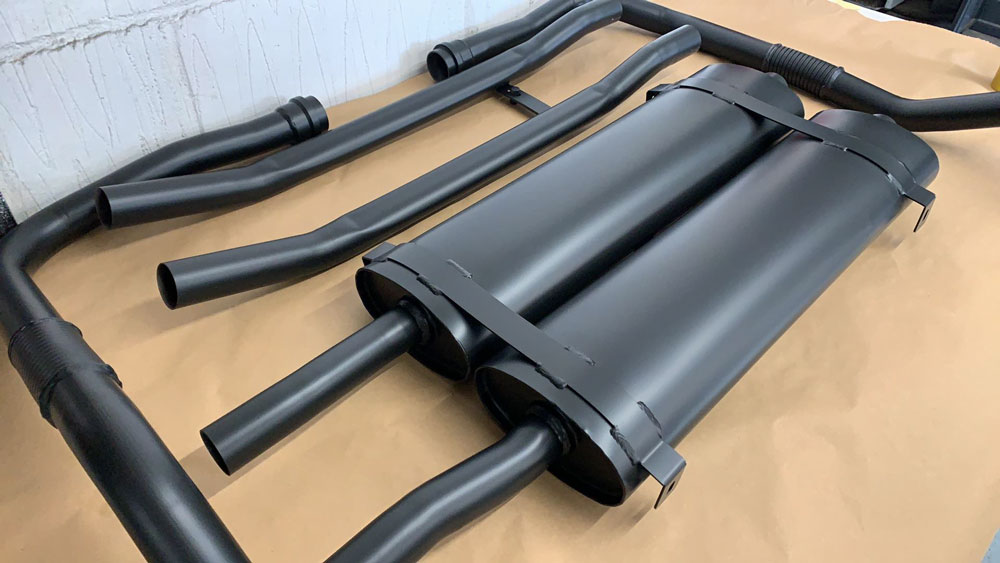
Ceramic coating protects exhaust and fuel system parts from high heat, oxidation, corrosion and rust. Headers and exhaust parts under the car are constantly exposed to road grime, salt, chemicals, dirt and debris.
In coastal areas, or where roads are gritted in winter, exposed exhaust pipes can quickly corrode, rust and eventually crack.
A high-temperature ceramic coating protects underbody exhaust parts from oil, fuel and other chemicals that corrode metal, and gives added resistance to stone chips and road debris.
Turbo housings and exhaust parts go through constant thermal cycling. They get extremely hot, often glowing red inside a turbo housing, then cool down rapidly. Over time this can make the metal brittle, leading to cracking, corrosion and eventually failure.
A high-temperature ceramic coating helps keep the metal’s surface temperature lower. This reduces thermal cycling and fatigue, extending the life of turbo housings and other parts exposed to rapid temperature changes.
Improves the Lustre and Appearance
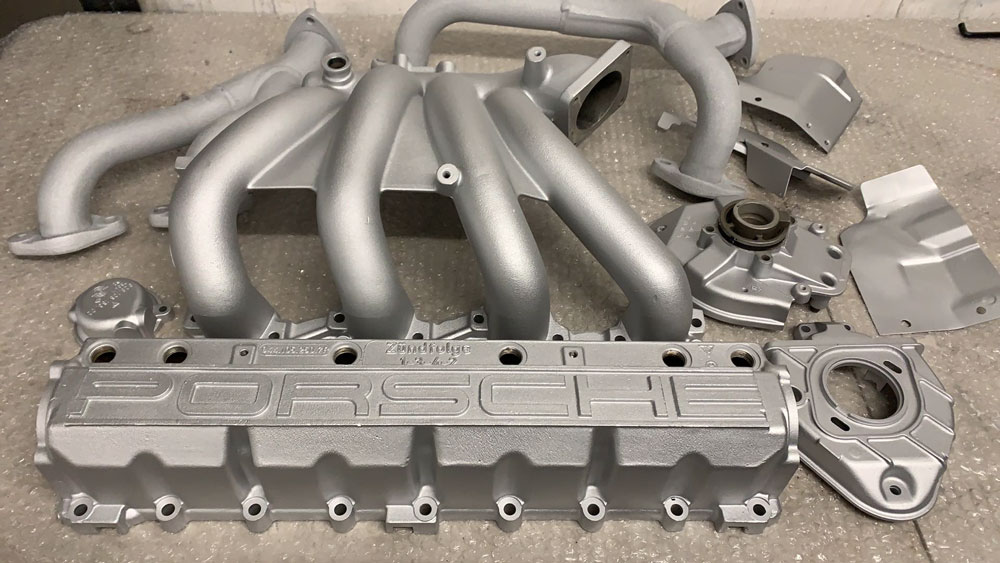
If you’ve had chrome headers before, you’ll probably have noticed discolouration on the bends. Heat concentrates on those bends, and chrome can’t cope with extreme temperatures. A high-temperature ceramic coating resists that heat and keeps its appearance.
It reduces the flaking, bluing and discolouration you get with chrome, standard powder coatings and other heat-sensitive finishes, and it’s available in many colours, including aluminium-effect finishes.
Performance matters too. If the exhaust system doesn’t keep up with upgrades made elsewhere on the engine, you can lose power, which is why many owners upgrade the whole system from manifold to silencer. Ceramic coating helps keep exhaust gases hot and flowing efficiently. It spreads heat more evenly across the metal and reduces hot spots on bends, which can help reduce backpressure and improve performance.
Heat-Dissipating Coating

Cerakote Transfer Grey is a charcoal grey with a soft metallic finish. It’s part of Cerakote’s heat-dissipating range: submicron coatings with industry-leading thermal conductivity, used to draw heat away from its source. Typical uses include radiators, engine blocks, transmission cases, heat sinks, intercoolers and anywhere else heat needs to be dissipated.
Hot Arc Wire Aluminium Plasma Coating

Plasma coating is a very rugged coating that gives outstanding protection and performance on all types of metal at temperatures up to 800°C, while reducing heat loss.
It protects against thermal fatigue, rust, corrosion and oxidation in the harshest conditions, extending the life of your parts many times over.
It’s highly recommended for parts that run very hot, such as turbo housings and manifolds, and for any ferrous or non-ferrous parts that need long-term protection, such as underbody parts, chassis, wheel arches and suspension components.
Alloy plasma coating has a slightly rough, semi-matt finish that also helps disguise any corrosion pitting left after blast cleaning.
Plasma coatings can be applied to any alloy, cast iron, steel or stainless steel. Typical uses include:
- Turbine housings (highly recommended)
- Turbo headers and manifolds (highly recommended)
- Supercharged engine exhausts (highly recommended)
- Full exhaust systems
- Heat shields
- Industrial parts
It’s particularly recommended for steel or cast iron manifolds and exhaust parts, including turbo housings. It stops rust creeping under the surface, keeps parts looking good for years to come, and helps reduce heat loss by 5–10% at temperatures above 200°C.
Once the plasma alloy coat is applied, a ceramic colour coat can be added on top. See the colour options for our Cerakote ceramic coatings, or find out about zinc metallisation for chassis and panels.
Zirconia Ceramic Coating
What is an HVOF/TBC zirconia ceramic coating?

Thermal barrier coatings (TBCs) are designed to resist thermal cycling and prevent overheating in hot sections such as manifolds and exhaust systems. Plasma-sprayed TBCs consist of a bond coat with a stabilised zirconia top layer. Partially stabilised zirconia, the type used in aircraft jet engines, has performed best in rigorous testing, and ongoing improvements continue to boost heat reduction and corrosion resistance.
The ceramic layer acts as a heat insulator and can reduce the exhaust’s surface temperature by up to a third. Lower temperatures under the bonnet mean cooler intake air, which can help engine power.
Ceramic coatings are popular with motorsport enthusiasts and are also used on other parts that get very hot, including sections of the body shell, to help keep cabin temperatures down.
Ceramic Coating FAQs
Does ceramic coating increase horsepower?
It can help. Keeping heat inside the exhaust maintains exhaust gas velocity and improves cylinder scavenging, and a cooler engine bay means cooler intake air. Gains vary from engine to engine, but the most reliable benefits are lower under-bonnet temperatures and longer-lasting exhaust parts.
What temperature can ceramic exhaust coating withstand?
It depends on the coating. Our Cerakote high-temperature ceramic coatings are rated up to around 980°C, plasma coating up to 800°C, and high-temperature powder coating up to 550°C. We’ll recommend the right system for your part and how hot it runs.
Can you ceramic coat stainless steel headers?
Yes. We ceramic coat stainless steel, mild steel, cast iron and aluminium parts. Every part is blast cleaned first so the coating bonds properly. We coat the outside of exhausts as standard, and can coat the inside on request.
What’s the difference between ceramic coating and plasma coating?
Ceramic coating is a thin-film coating with a smooth finish, available in many colours. Plasma coating is a thicker, arc-sprayed aluminium layer with a slightly rough finish, giving heavy-duty protection against heat, rust and corrosion. The two can be combined, with a plasma base coat and a ceramic colour coat on top. Cerakote ceramic coatings carry a one-year guarantee, and our two-stage plasma base and Cerakote system carries a two-year guarantee.
Can you ceramic coat turbo housings?
Yes. Turbo housings are one of the parts that benefit most, because they go through extreme heat cycles. A ceramic or plasma coating keeps surface temperatures down, reduces fatigue and cracking, and protects against corrosion. You can send your turbo complete, with no need to strip it down first. Call 01621 841100 to discuss your turbo or exhaust parts.